


The importance of consistent grades and accurate measurements cannot be underestimated.
Timberpride uses the standardised European Hardwood Grading System which encompasses visual grading for the load bearing characteristics of structural timber and appearance grading of hardwood timber for non-structural applications.
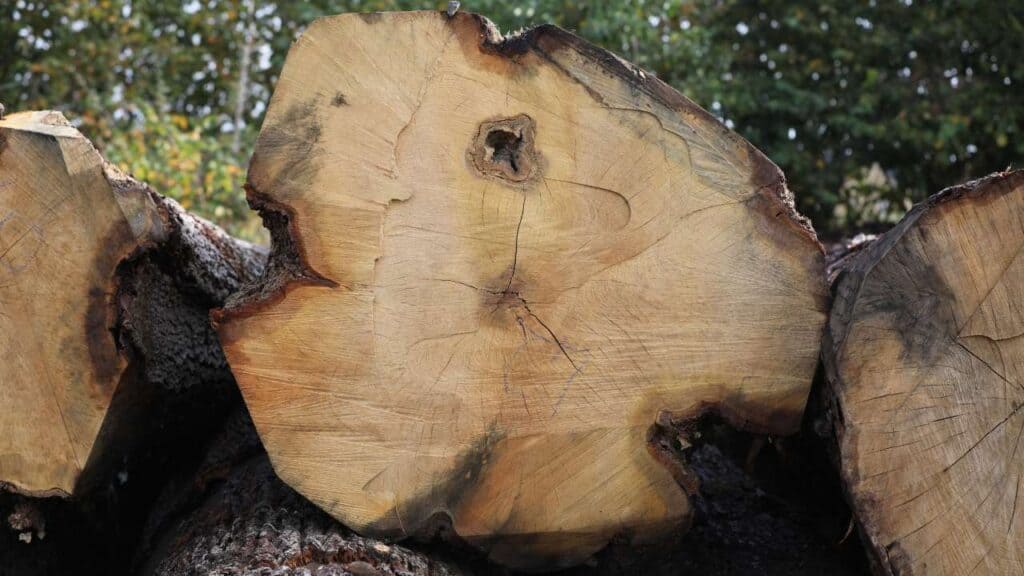
Grades are stipulated by the presence, size and/or frequency of knots and splits on the ‘best face’ of the plank or board. The characteristics of the worst face are taken into account if they are likely to affect the performance of the timber in its intended use.
Grade letters indicate the genus and form of the timber e.g. QB1 where the letters denote the timber and type; and the number denotes the grade
Q = Oak (Quercus is the Latin for the Oak genus)
B = Waney edged boards
F = Square edged boards
P = Beams
Grade numbers indicate the board quality in terms of defects. The number defines the maximum size and number of defects allowable per linear meter and the ratio of defect size to width of board.
QBA: 2/3 of the board is clean, straight and with a regular heart. 1 knot with a maximum diameter of 30mm per 2 linear metres is acceptable.
QB1: 1 knot with a maximum diameter of 40mm per 2 linear metres is acceptable, larger knots area acceptable providing they isolated to 25% of the board and lead to a volume reduction.
QB2: Sloping, twisted or curly grain is permitted. 1 knot with a maximum diameter of 80mm per 2 linear metres is acceptable, larger knots are acceptable providing they are isolated to 25% of the board and lead to a volume reduction. Unsound knots are acceptable on a10% of the boards
QB3: Knots, defects or deterioration are permitted without limitation.
Please download the pdf ‘Making the Grade’ for more information about appearance and grading of wood. You can also download this pdf at the Forestry Commission Website.